

About
The Trinity Challenge
The Trinity Challenge is a charity supporting the creation of data-driven and analytics solutions to help protect the world against global health threats.
Who we are
The Trinity Challenge is a charity supporting the creation of data-driven solutions to help protect against global health threats.
Our Vision for Change
We believe data and analytics hold the key to building effective, affordable, and scalable solutions to current and future pandemics and health emergencies.
Our Mission
We support data-driven solutions that will help the world prepare for and respond to global outbreaks and health emergencies. We’re committed to working with governments, individuals and organisations across the world, to help improve our resilience against current and future threats to global health.
Our Challenges
The Trinity Challenge was founded in response to the COVID-19 pandemic, which highlighted a global need to be better prepared to tackle healthcare emergencies.
Our inaugural Challenge on Pandemic Preparedness and Response asked teams to deliver data-driven solutions to predict, respond to and recover from pandemics. The Challenge received applications from 340 teams across 60 countries and distributed a prize fund of £5.7 million across eight winning initiatives.
Following its success, our second Challenge was a call to the world’s best and brightest minds for data-driven solutions that would protect the power of antibiotics. The Trinity Challenge on Antimicrobial Resistance received 285 applications from teams in 57 countries and distributed a prize fund of £2.7 million to four winning initiatives.
In 2025, as part of our continued work on antimicrobial resistance, we launched The Trinity Challenge on Community Access to Effective Antibiotics. This Challenge welcomed outstanding, data-driven solutions from teams working in low- and middle-income countries to address the issues of antibiotic stock control and substandard and falsified oral antibiotics. The Challenge received 171applications from teams in 51 countries and distributed a prize fund of £1 million to two winning initiatives.
Our Convenor
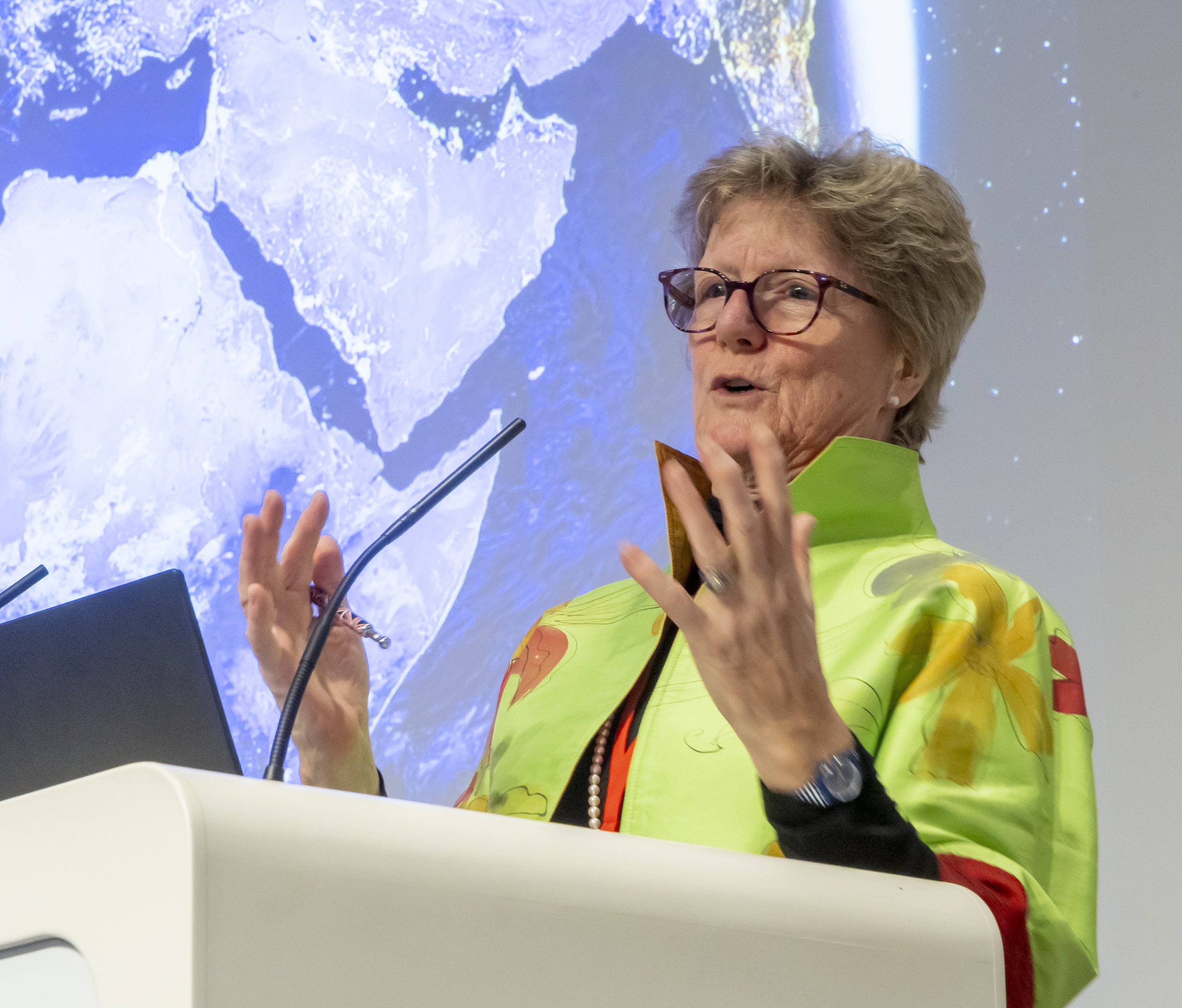
Dame Sally Davies
Dame Sally Davies is the 40th Master of Trinity College, Cambridge University and the first woman to hold the post. She was appointed as the UK Government’s Special Envoy on Antimicrobial Resistance (AMR) in 2019.
Dame Sally was the Chief Medical Officer for England and Senior Medical Advisor to the UK Government from 2010-2019. She is a leading figure in global health, having served as a member of the World Health Organisation (WHO) Executive Board 2014-2016, and as co-convener of the United Nations Inter-Agency Co-ordination Group (IACG) on AMR, reporting in 2019. In November 2020, Dame Sally was announced as an inaugural member of the new UN Global Leaders Group on AMR, serving alongside Heads of State, Ministers, and prominent figures from around the world to advocate for action on AMR.
In the 2020 New Year Honours, Dame Sally became the second woman to be appointed Dame Grand Cross of the Order of the Bath (GCB) for services to public health and research, having received her DBE in 2009. She was elected Fellow of the Royal Society in 2014 and a member of the National Academy of Medicine, USA in 2015.
Our Three Foundational Principles:
Inclusivity
Our shared vulnerability to health emergencies means resilience is a global necessity – and our solutions need to reflect this scope and potential for scalability.
Collaboration
Actions arising from silo & solo thinking are unlikely to provide the answers we need. We understand that cooperation is of paramount importance, to ensure we don’t lose momentum as pandemics emerge and recede over time.
The Trinity Challenge is catalysing the collision between public health and technology, enabling teams to connect and contribute insights that will translate into global public goods.

Innovation
Data can unlock breakthrough discoveries to inform how we should act in order to improve outcomes. With the right analytical minds and data sources, we can and must develop new ways of protecting ourselves against health emergencies.